


Prostatitis is a disease that can happen to every man.
The urinary tract passes through the prostate gland, which contributes to the manifestation of one of the first symptoms of the disease - difficulty urinating.
Prostatitis - the beginning
The onset of the disease is always associated with certain conditions of our life.
There are several types of prostatitis:
- spicy;
- Chronic;
- infectious (bacterial);
- Non-infectious.
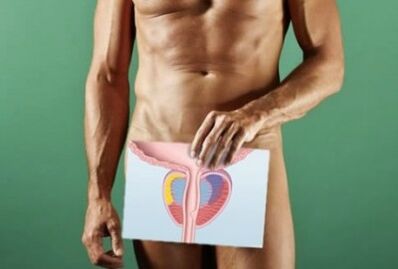
The nomenclature, in this case, is dual, for example, infectious prostatitis can be chronic and acute.
Each type of prostatitis will start differently and be preceded by its own individual conditions.Let's look at them.
Risk factors, occurrence conditions
- STD.When infected with any sexually transmitted infection from a sexual partner, a man has a high chance of developing an acute infectious prostate, which can then turn into a chronic one.Thus, sexually transmitted diseases will be the first factor predisposing to prostatitis.
- Sedentary lifestyle, sedentary work, apathy to sports and morning exercises, obesity.This is the cause of non-infectious prostatitis, which can worsen or occur with vague symptoms.
- Hypothermia - at this time, the genitourinary system is often exposed to cold attacks, as a result of which the bladder, seminal ducts, prostate gland and testicles can become inflamed.
- Age.When a man reaches the age of 40-45, irreversible changes begin in the prostate gland.It is associated with male menopause - a direct result of hormonal changes in the body.The prostate enlarges (hyperplasia), which is (or may be) accompanied by all the symptoms of prostatitis.
Let's summarize again - these factors increase the chance of developing prostatitis tenfold.

Next, we will analyze the first signs of different types of prostatitis.
Attention, when the first symptoms are detected or before self-diagnosis in a panic, seek contact with a doctor - pay attention to the above risk factors.Maybe you don't have prostatitis!
Symptoms
Sharp process
Let's clarify that the first symptoms of acute prostatitis are mostly similar in all patients:
- pain during urination, then burning;
- An increase in temperature;
- After heroically emptying the bladder, the patient feels that there is still urine in it;
- Complaints of pain in the groin and perineum.
The pain begins sharply, and there are problems with the toilet.This is due to the rapid increase in swelling of the inflamed prostate.
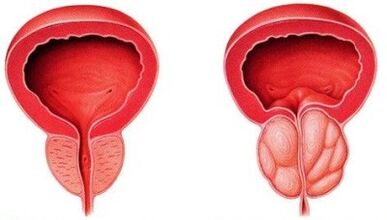
Symptoms may disappear on their own, but do not create illusions: this does not mean that the disease has passed.
Prostatitis is chronic.A long time (years) can pass from the first symptoms of acute prostatitis to the onset of chronic prostatitis.
Chronic process
Perhaps the patient did not have an acute period, and the disease passed it and became chronic.
In this case, the symptoms will be as follows:
- Dull pain in the anal area after defecation spreading to the tailbone;
- Regular or irregular groin pain;
- Going to the toilet is not too difficult, but you need to strain your stomach a little to start urinating.The patient does not pay much attention to it;
- Sometimes there is a burning sensation in the urethra after urinating.
The first symptoms of chronic prostatitis may appear over a long period of time.They may disappear, then reappear.
Infectious prostatitis
Often, the patient with infectious prostatitis carries other sexually transmitted diseases.
Among the first signs:
- Pain in the urethra, blood in the urine;
- An increase in temperature;
- white urine (pus);
- Frequent urge to go to the toilet.
The first symptoms of bacterial prostatitis are similar to acute prostatitis, because the latter type is often caused by the efforts of an infectious agent.

Non-infectious prostatitis
After 40 years, a man can feel the first symptoms of non-infectious prostatitis.It's not the bacteria's fault, it's just time.
The prostate enlarges, it can manifest itself in some way or it can be ignored.
If a man is experiencing problems, it turns into such manifestations:
- difficulty urinating;
- Residual urine in the bladder.
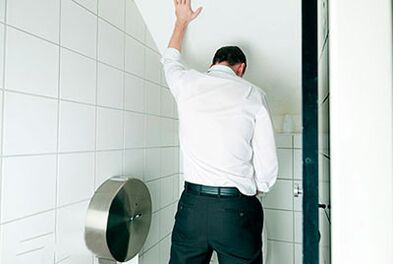
If this causes inflammation of the prostate, pain, burning and possibly temperature are added.
Any prostatitis has main (main) manifestations in problems with urination.Pain can have different localization and intensity, the burning sensation may disappear at the end of urination and after.
Sexual problems occur in 99 out of 100% of cases, but this is a long process that takes several years or more.
Among the first signs is a weakening of the urinary pressure.If you have to strain your abdominal muscles to start urinating (even if you don't even notice), it's time to see a urologist.
This is the first sign of impending prostatitis.
Are you ignoring all these symptoms?
Let's say that acute prostatitis goes away on its own (let's imagine that it goes away).
After a few days of suffering, we can easily go to the toilet again, and the burning sensation and pain have left us.
Euphoria will not last long - chronic inflammation occurs in the prostate, so prostatitis will remind itself.
This is not the worst thing, because you can live with such feelings.What matters is what happens inside the prostate gland.
Let's remember what its function is - to maintain the vital activity of sperm.
Prostatitis inhibits and blocks this function.As a result of advanced prostatitis, a man may lose the ability to fertilize.
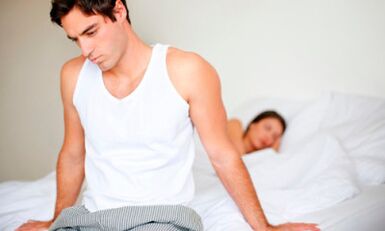
Another unpleasant consequence of advanced prostatitis is depression and bad mood.Constant "toilet" problems bring stress to a man.
Incomplete emptying of the bladder causes inflammatory processes in it and other parts of the urinary system.
So don't be idle.
How to detect prostatitis?
At the first signs of the disease, contact a urologist and let us know how you feel.
Prostatitis is diagnosed by anamnesis, rectal examination of the prostate gland and TRUS.
Other methods are additionally used to identify or exclude comorbidities.
You can diagnose at home.But prostatitis can be confused with inflammation of the urethra or bladder, so read the diagnosis of prostatitis carefully.
Treatment
Treatment of prostatitis depends on its form.
The main duties of a doctor are:
- Restoration of normal ureter.This means reducing swelling, relieving muscle spasms, and stimulating urine production and elimination.
- Fighting an infectious agent or physically eliminating the cause of prostatitis.
- Prevention of relapses (diet, lifestyle and healthy habits).
- Stimulation of prostate activity - rectal prostate massage.
The treatment can be carried out at home, the methods of treatment are agreed in advance with a urologist.For example, it is useful to give special microlism with herbal decoctions.
The doctor will prescribe physiotherapy to speed up recovery.